
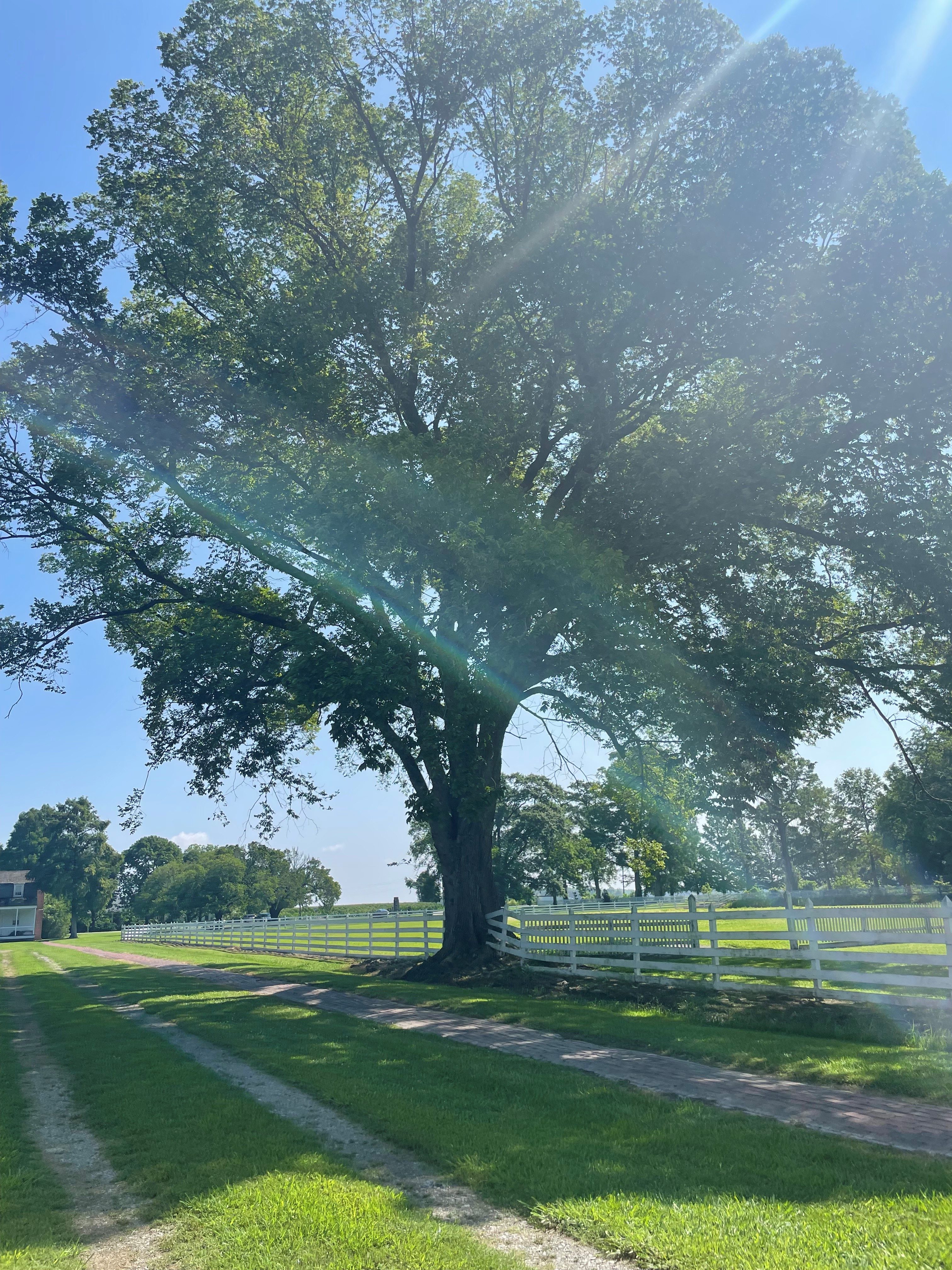
“I am my ancestors’ wildest dreams.” This quote stuck in my mind as I looked out at the land, lake, and sky at Somerset Place, once the largest plantation in North Carolina. At the beginning of the tour, I looked forward to learning about the history of Somerset but I was not really thinking about how this mini half-day trip could be a personal and revelatory experience for three generations of my family. Right off, my 86-year-old grandfather had questions for the tour guide and shared some of his knowledge of slavery and history of the enslaved and the ports from which they arrived in NC. As we stood in the shade on this hot and humid July morning, listening to the tour guide tell about some of the rewards and punishments that took place at this particular plantation, my mind began wonder about the families, the humans, the souls, the ancestors of the enslaved from this plantation. Walking the grounds, I saw veteran trees and wondered, “what if those who were enslaved here at this plantation saw these same trees? They probably never thought that generations of non-enslaved African Americans would come to these grounds to see how they lived”. As I saw Phelps Lake in the distance, I thought, “This is the same body of water that the enslaved men, women, and children, saw and maybe wondered if their chance of freedom was waiting on the other side”. As I learned about the six mile long canal that enslaved laborers dug (and even some died while digging), I thought and even said to my girls and grandfather, “I cannot even imagine that hardship and the sense of hopelessness and despair they must have felt”. As we walked across the grounds, I kept reminding my girls to look around and take in all that was there on the land; not just the physical buildings but also the history and the stories that our tour guide shared. As we came to a white picket fence, the tour guide explained to us that the enslaved people were not allowed to enter the picket fence or any buildings within the fence without permission. Stepping through that physical boundary again brought to mind the ancestors. When we reached the front door at the plantation owner’s house, the tour guide offered the key to my 9-year-old daughter to unlock the door. Her excitement and nervousness was evident. The history enthusiast in her was excited to see what was behind the door of this 193-year-old home but she was nervous about the “creepiness” of the structure. As we entered, it was understandable for a 9-year-old to be a little creeped out at pictures of slave owners seemingly watching us from their original portraits adorning the walls of almost every room; seeing bills of sale for humans who were treated as property; and learning about original pieces of furniture and chamber pots that once sat “the butts of slave owners” as my 12-year-old so eloquently stated. As the tour concluded, there was a little sigh of relief from my girls, from the heat and from the heaviness of the day. As I drove away, enjoying the luxury of my grandfather’s air-conditioned Buick Encore, my grandfather pointed out the canal that could still be seen and the swampy land and fields where it was noted that some slaves attempted to escape. My mind immediately went back to thinking about the ancestors, the enslaved that built the canal, and thinking about how fortunate we are and how even on our worst days, I/we are still our ancestors’ wildest dreams.

 InspiHeard Now
You must be logged in to post a comment.